Yirrkala Dhunba
Yirrkala Dhunba is an Indigenous Australian artist whose practice spans painting, installation, and bioart. She explores the intersections of cultural knowledge, survival, and speculative science, bringing Indigenous voices into urgent conversations about climate change and biotechnology.
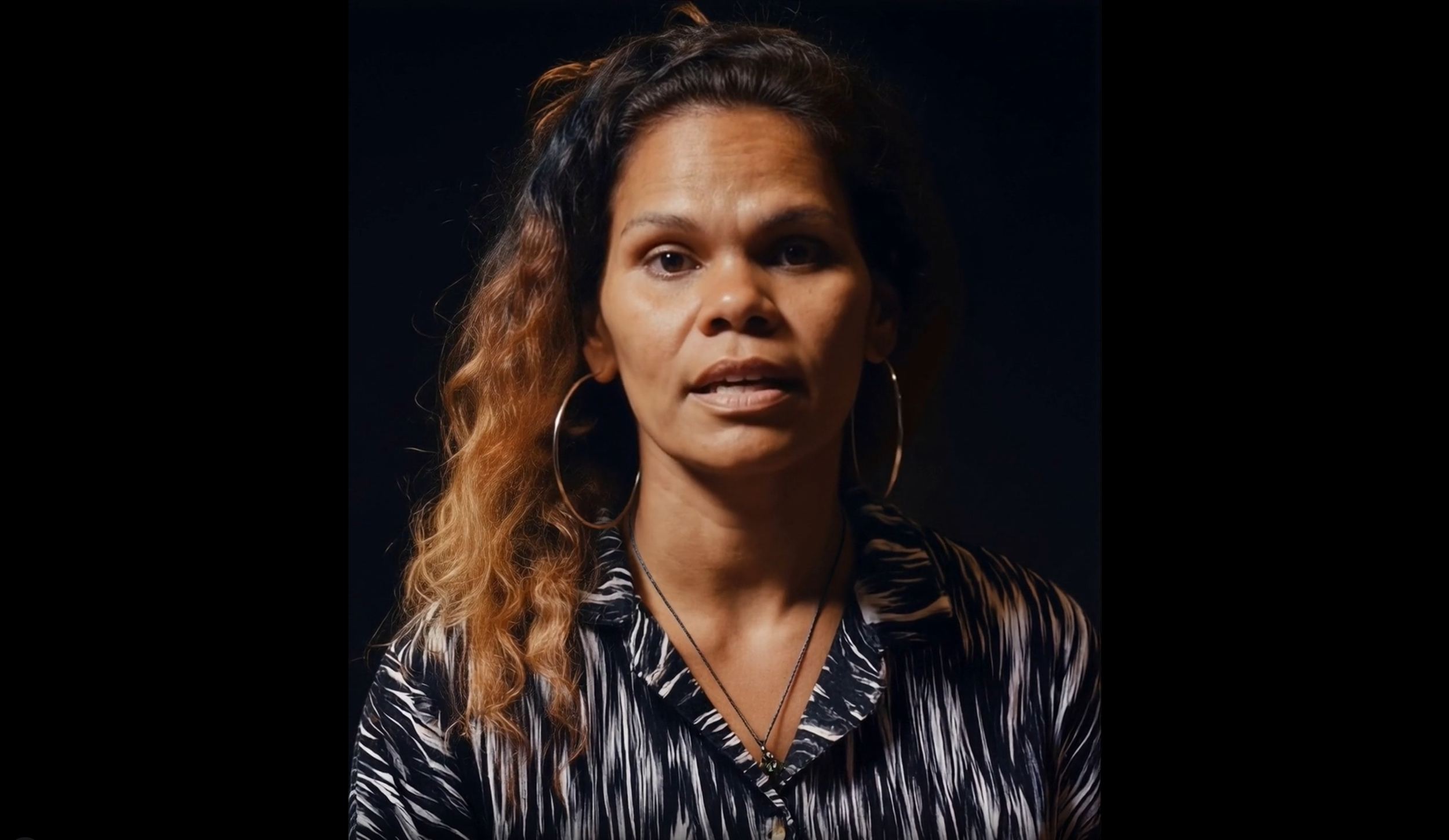
Yirrkala Dhunba at
Meta.Morf 2026
Indigenous Genomic Adaptation
K-U-K, Trondheim — until 31 May
Currently on view at K-U-K as part of Meta.Morf 2026, Yirrkala Dhunba presents Indigenous Genomic Adaptation. The work draws on the visual language of genomics and biotechnology to question how survival is defined under climate collapse.
Dhunba has also had an academic paper accepted for ISEA 2026 and looks forward to presenting her work in Dubai.
She also extends thanks to Tommy Olsson for his review in Kunstkritikk.
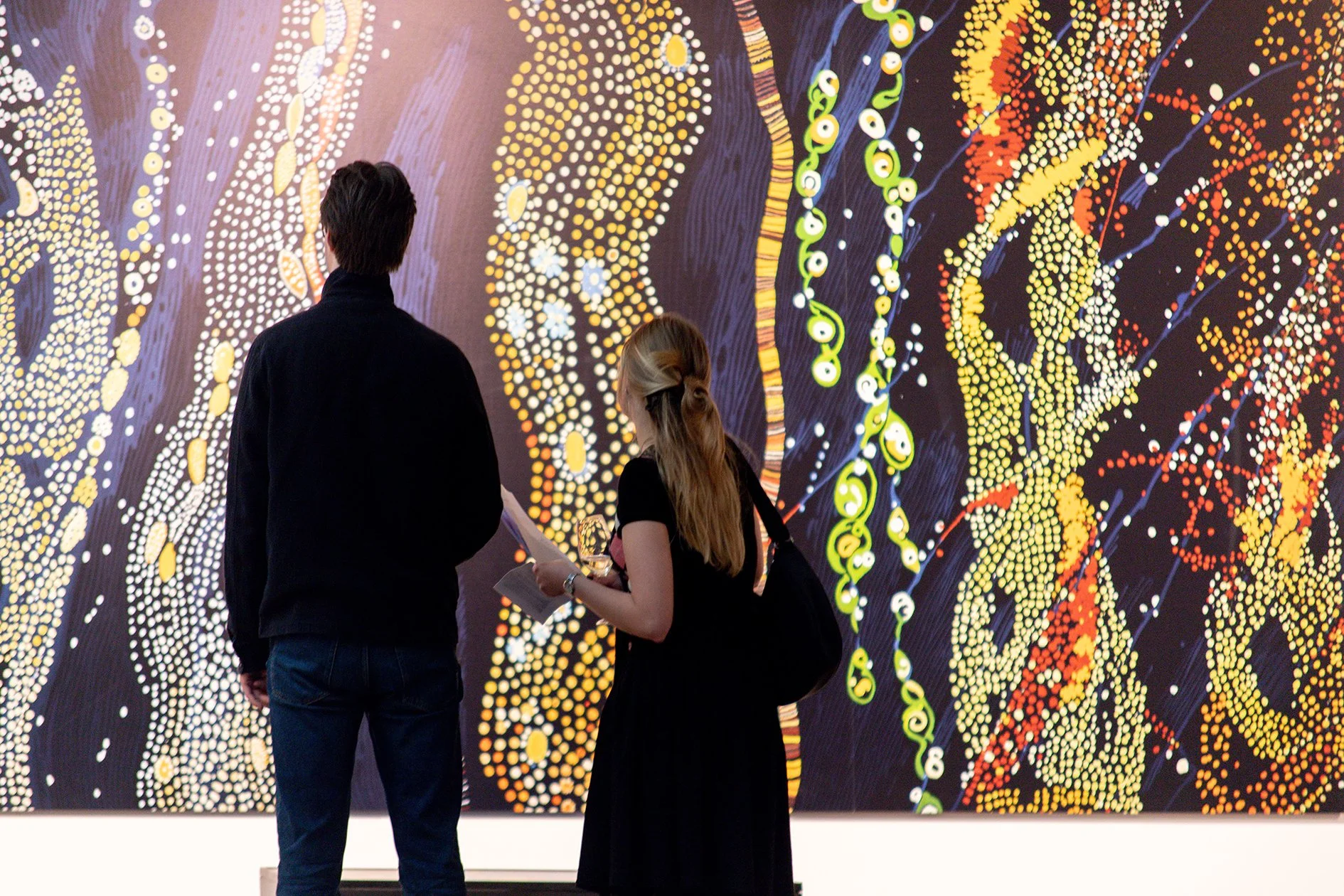
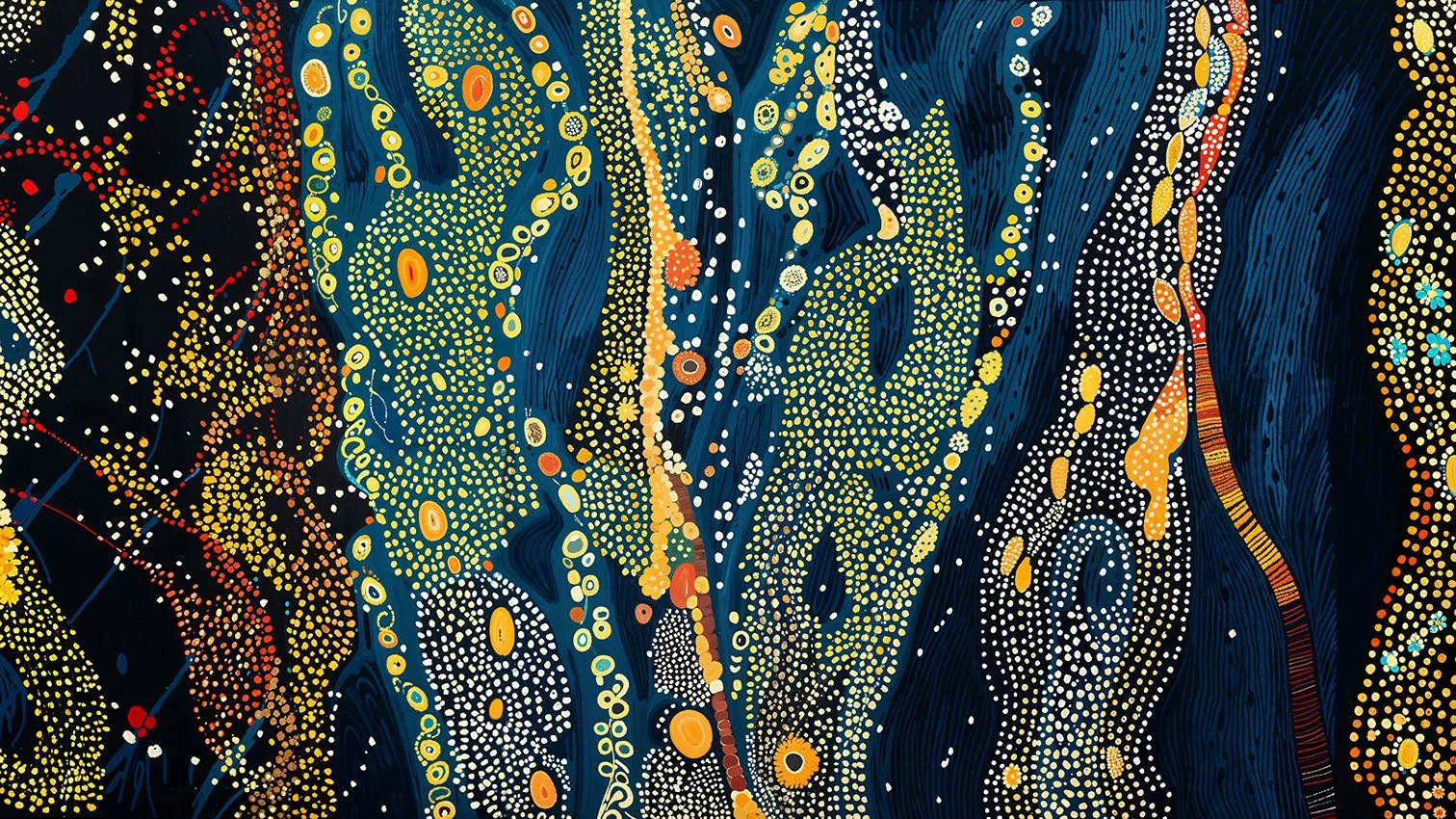
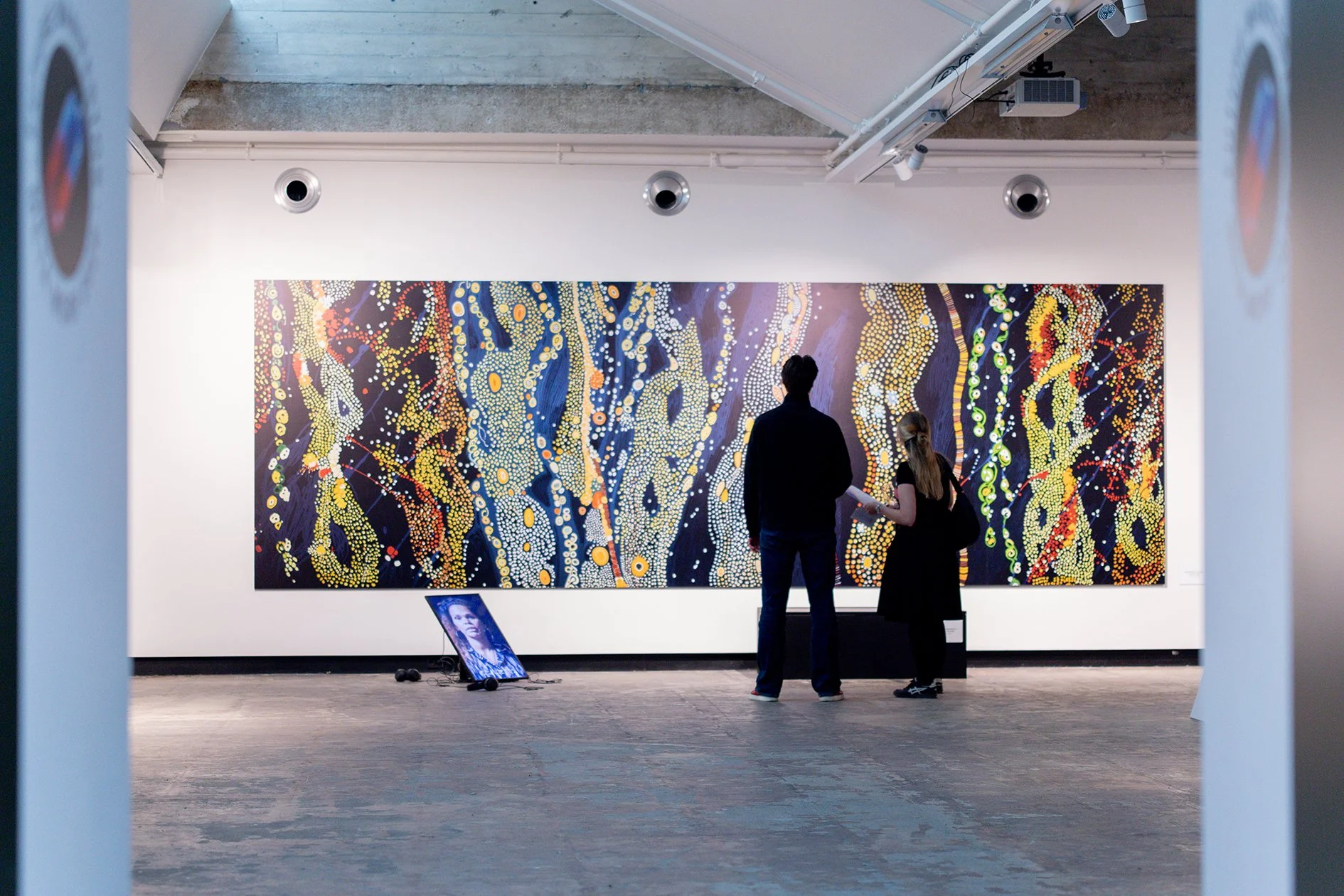
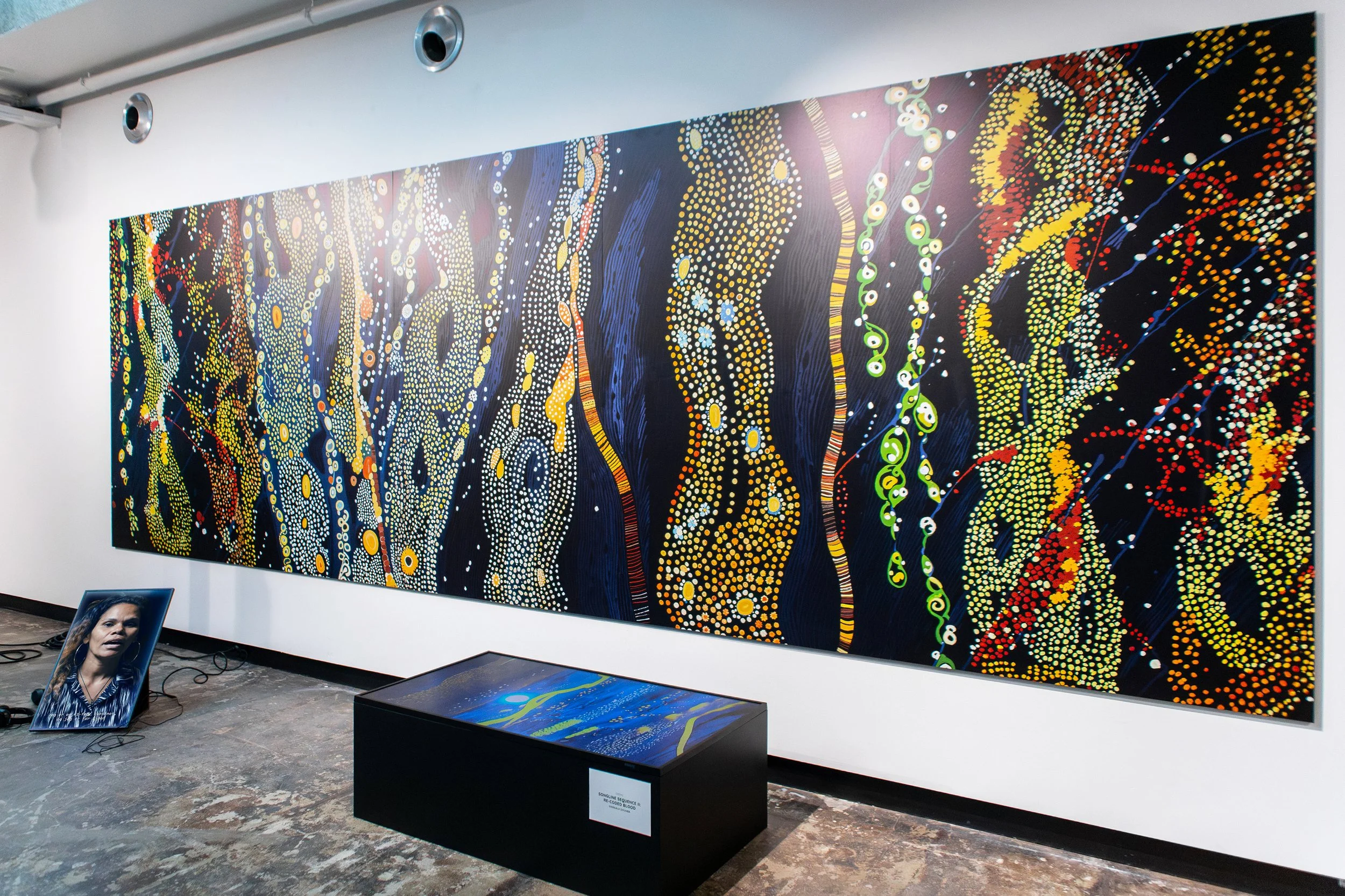
Indigenous Genomic Adaptation
Indigenous Genomic Adaptation is a work about the right to survive the Anthropocene—the age of catastrophes—on Indigenous terms.
It examines how Indigenous futures are dominated by the language of biotechnology under conditions of climate collapse. I begin from a simple concern: when ecological crisis intensifies, “adaptation” is often framed as a technical story—measurable, improvable, and governable. In that story, the future body becomes infrastructure: something to be designed to endure what extractive systems have produced. My work does not propose biotechnology as a solution. It stages biotechnology as contested terrain—a field of authority where survival is narrated, negotiated, and sometimes quietly determined in advance.
The project takes the aesthetics of genomics seriously, not as scientific representation but as cultural power. Genomic imagery is one of the most persuasive visual languages of our era. It offers the fantasy of total legibility: that life can be rendered as code and therefore rewritten. In Indigenous Genomic Adaptation, I borrow this language to expose its force. I use monumental scale to echo the way institutions monumentalize “innovation” and “resilience” through compelling images that look definitive, clean, and future-ready. Scale becomes a pressure: it amplifies the feeling of certainty. At the same time, the work refuses to deliver the certainties it seems to promise. What appears as code does not resolve into instruction. What appears as evidence does not become proof. This is not a failure of the work—it is the work’s ethical position.
The central tension in the project is between two impulses that are often collapsed into one: the desire to survive, and the desire to control. Climate collapse produces real urgency. But urgency can also become an alibi for interventions that treat Indigenous life as a site of optimization. I am interested in how quickly “saving” becomes “editing,” and how quickly “adaptation” becomes a governance project. I work with these questions through image and expectation—through the viewer’s encounter with what appears technically credible, and the ethical costs hidden inside that credibility.
The work draws on the look and behaviour of data—systemic patterning, mutation-like drift, repetition and breakdown—without becoming legible as sequence, diagram, or instruction. The technology element is not that the work “explains science,” but that it shows how technological cultures make futures believable through the aesthetics and behaviours of data. In other words, it is about technological aesthetics as power, not technology as demonstration. It looks like technoscience, behaves like a system, and refuses to resolve into proof—so the viewer confronts their own impulse to trust technical-looking images.
The work’s ethical boundary is part of its meaning. I refuse to use community genomic datasets or to produce functional genetic claims. This refusal is not an avoidance of rigor; it is a refusal of extraction. It is a way of insisting that Indigenous futures cannot be reduced to raw material for technological imagination, and that sovereignty must include the right not to be rendered into data. The project therefore operates as ethical friction: it borrows the authority of technoscientific aesthetics in order to make that authority visible, interruptible, and accountable. It asks the viewer to notice how credibility is manufactured—and to notice their own willingness to trust it.
Ultimately, Indigenous Genomic Adaptation is a work about the right to imagine survival on Indigenous terms. It refuses the two dominant narratives that often surround Indigenous futures: the romantic fantasy of timelessness and the fatalistic fantasy of disappearance. Against both, I insist on futurity as an active space—complex, negotiated, and culturally grounded. The work does not offer a future solution. It offers a future question: when climate pressure and technological acceleration converge, will Indigenous life be treated as an editable problem to be managed, or as a sovereign continuum of knowledge, relation, and responsibility that cannot be optimized without loss?
EARLY WORK
EARLY WORK
EARLY WORK
EARLY WORK EARLY WORK EARLY WORK
Indigenous Genomic Adaptation (2023-)
Indigenous Genomic Adaptation is a speculative bioart installation that stages a laboratory of survival. Petri-dish paintings with DNA mutations sit alongside DIY CRISPR sets, visualizing Indigenous futures re-sequenced under the pressure of climate change. Dhunba combines traditional aesthetics with speculative science, asking whether adaptation through AI and gene-editing can be a strategy for survival — and who has the authority to decide.
At its core, the work raises difficult ethical questions: can technology safeguard culture, or does it inevitably risk its erasure? Dhunba does not offer answers but insists that the debate itself must include Indigenous voices — not just as subjects of study, but as agents of design.
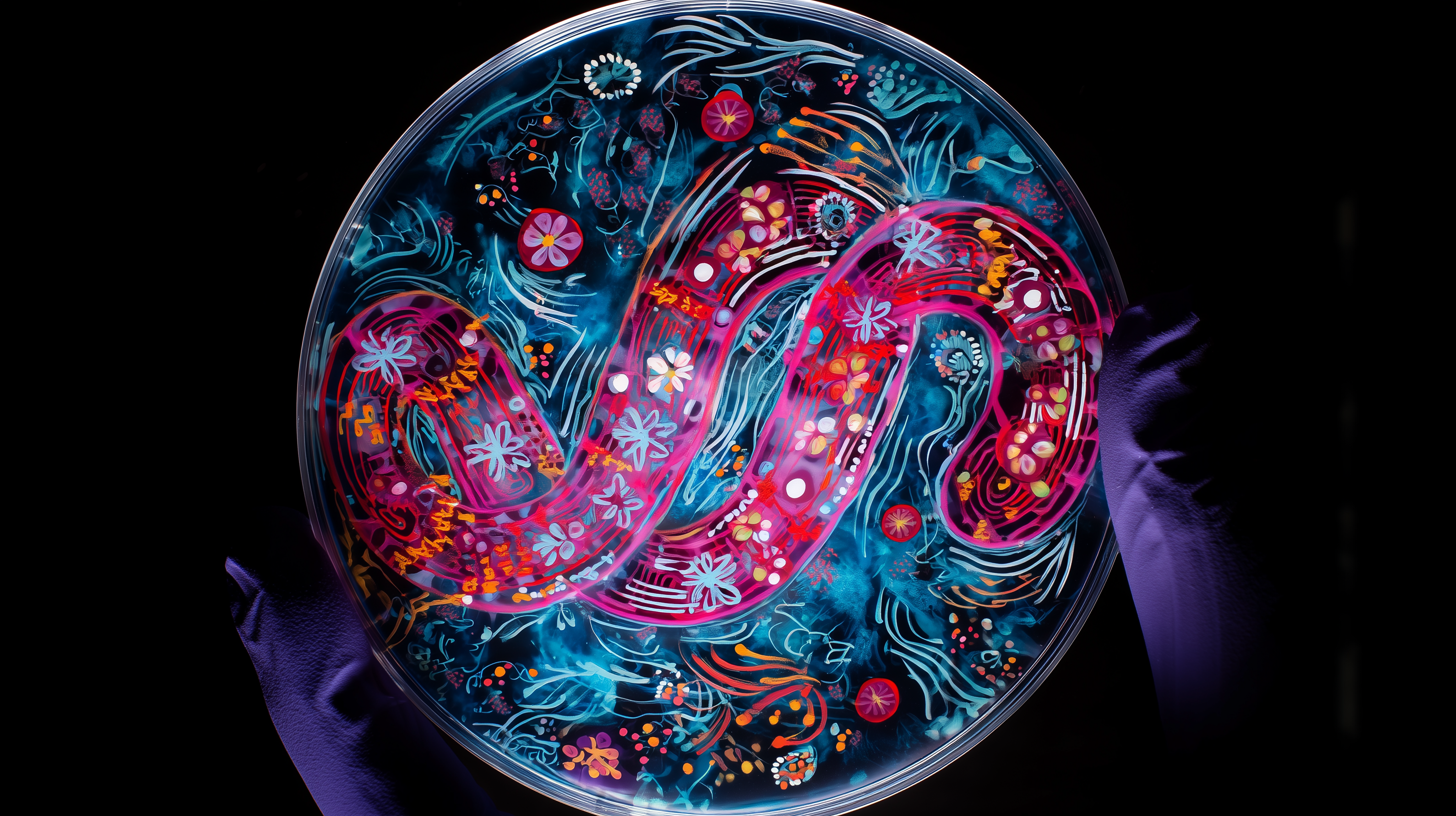
Detail from “Indigenous Genomic Adaptation” — hand-painted Petri dishes visualizing speculative DNA mutations, where cultural symbols meet molecular diagrams.
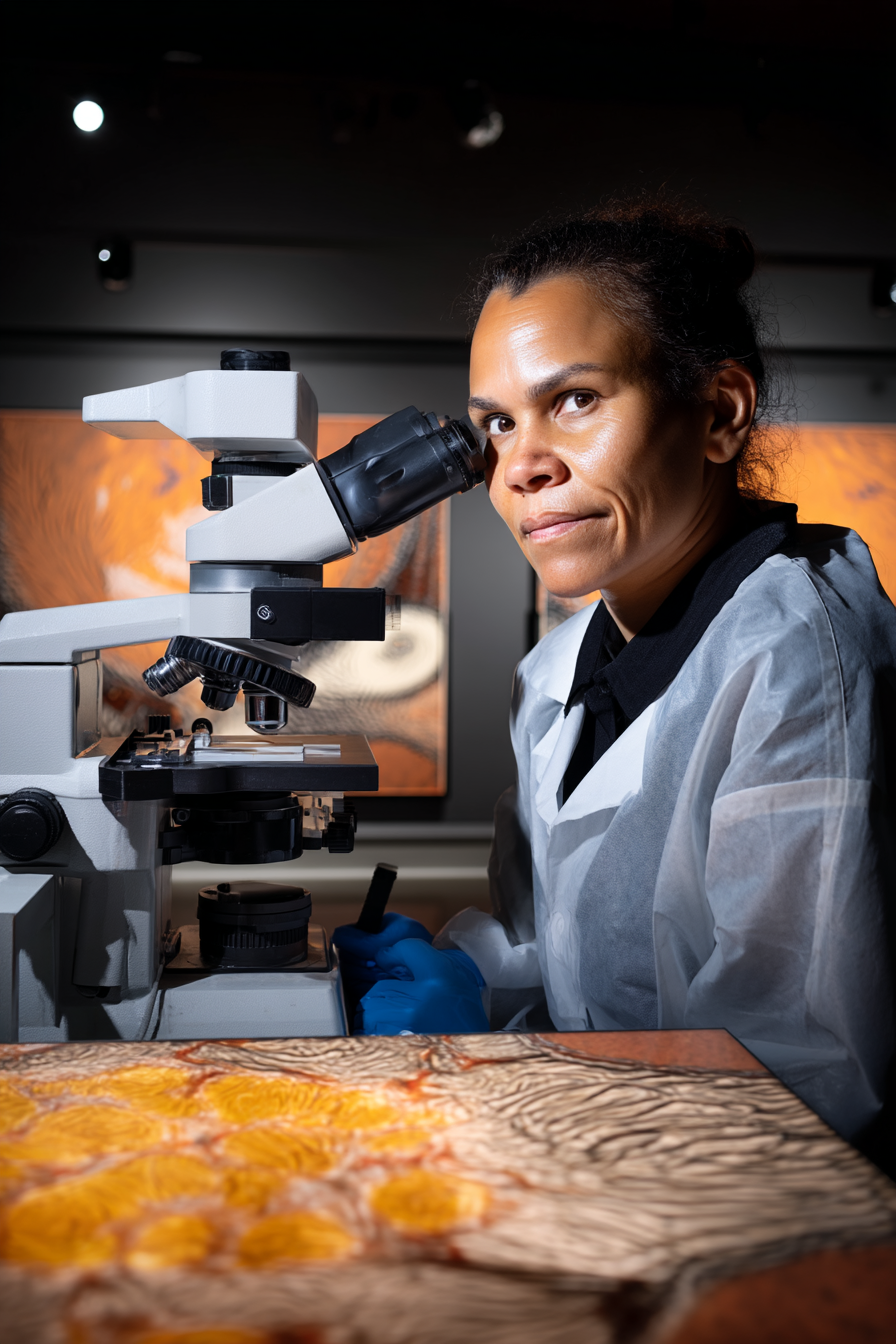
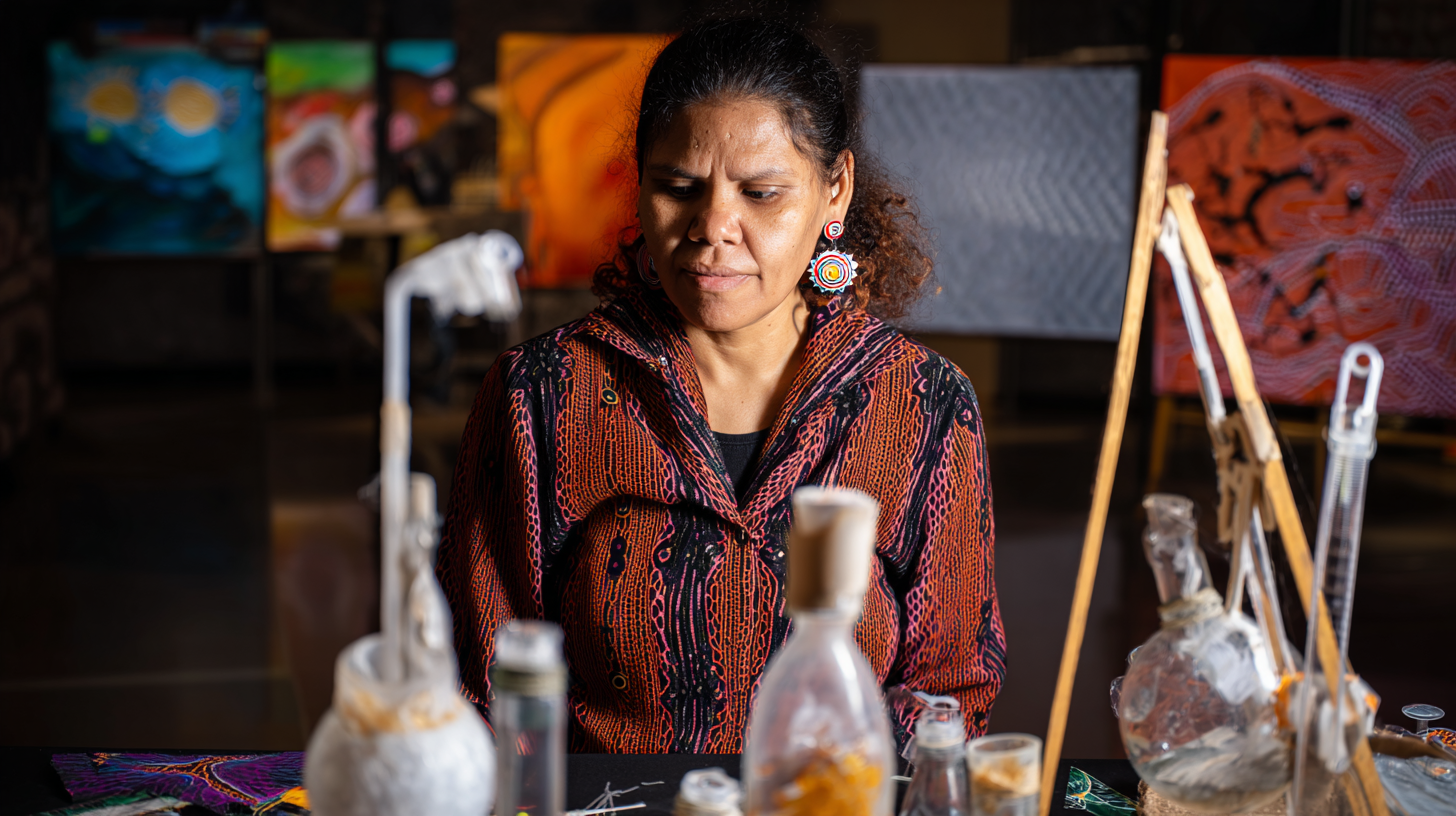
The artist in her speculative laboratory, working with DIY CRISPR kits and pigments drawn from Indigenous materials — blurring science, ritual, and resistance.
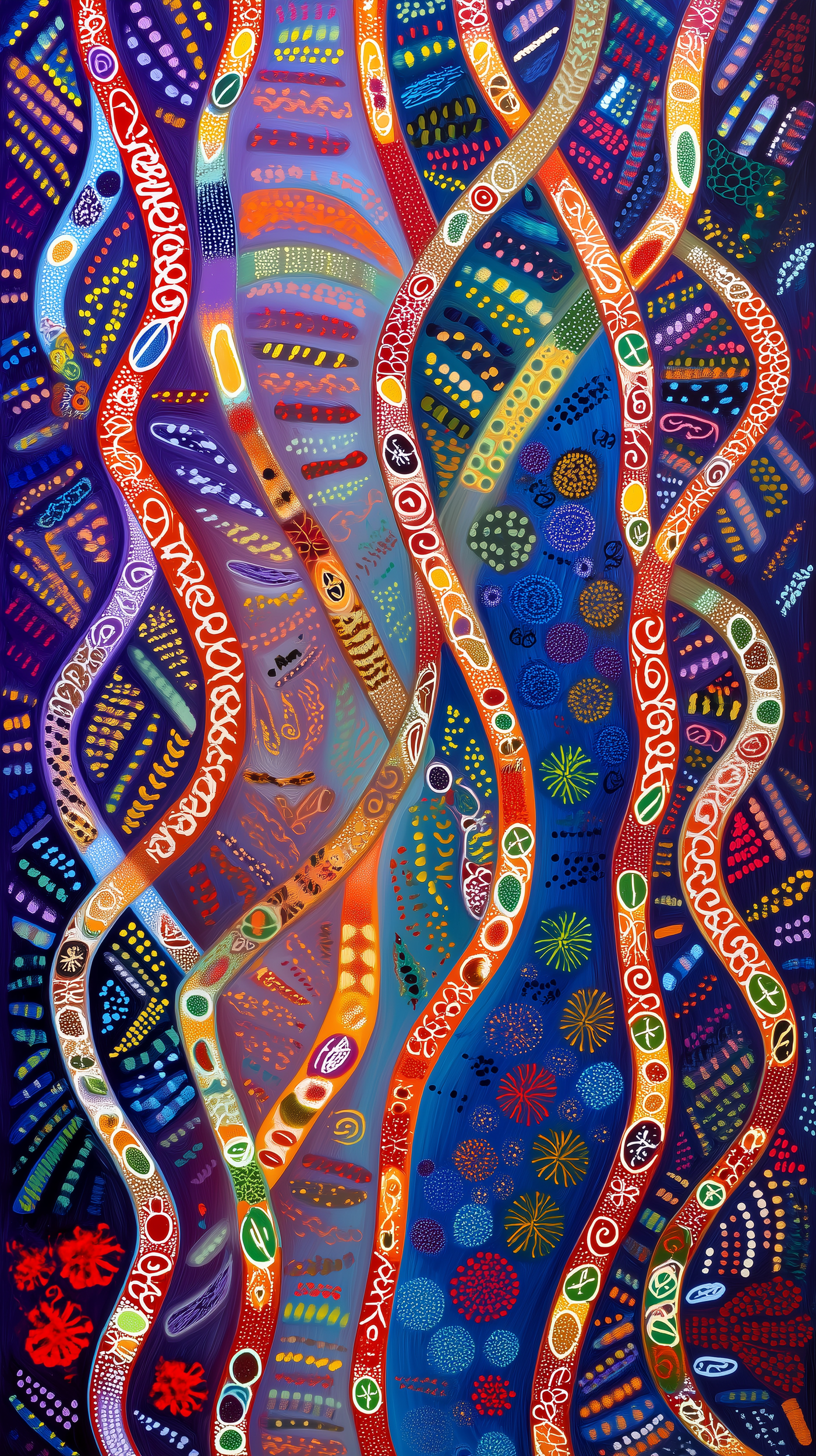
Speculative representation of genetically engineered Indigenous DNA — an imagined archive of survival, where technology becomes both threat and promise.
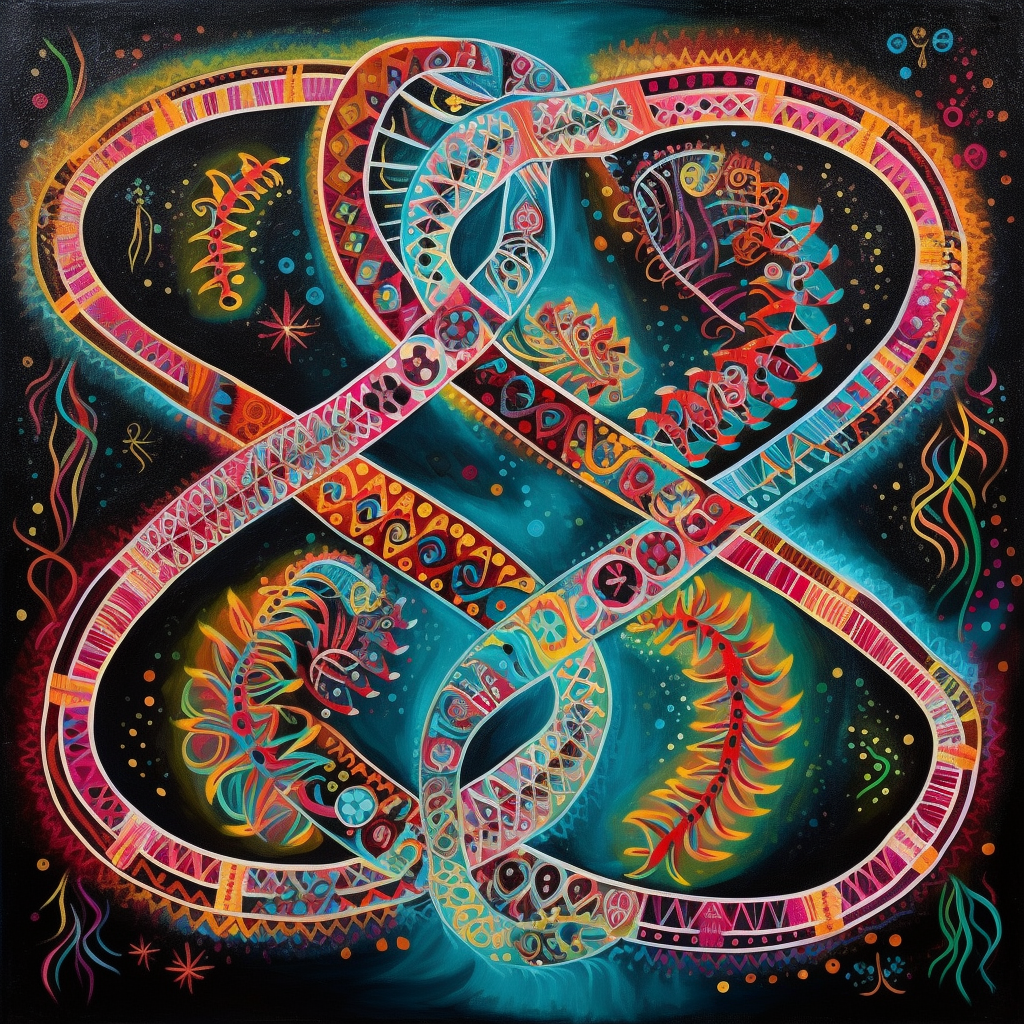
Speculative representation of genetically engineered Indigenous DNA — an imagined archive of survival, where technology becomes both threat and promise.
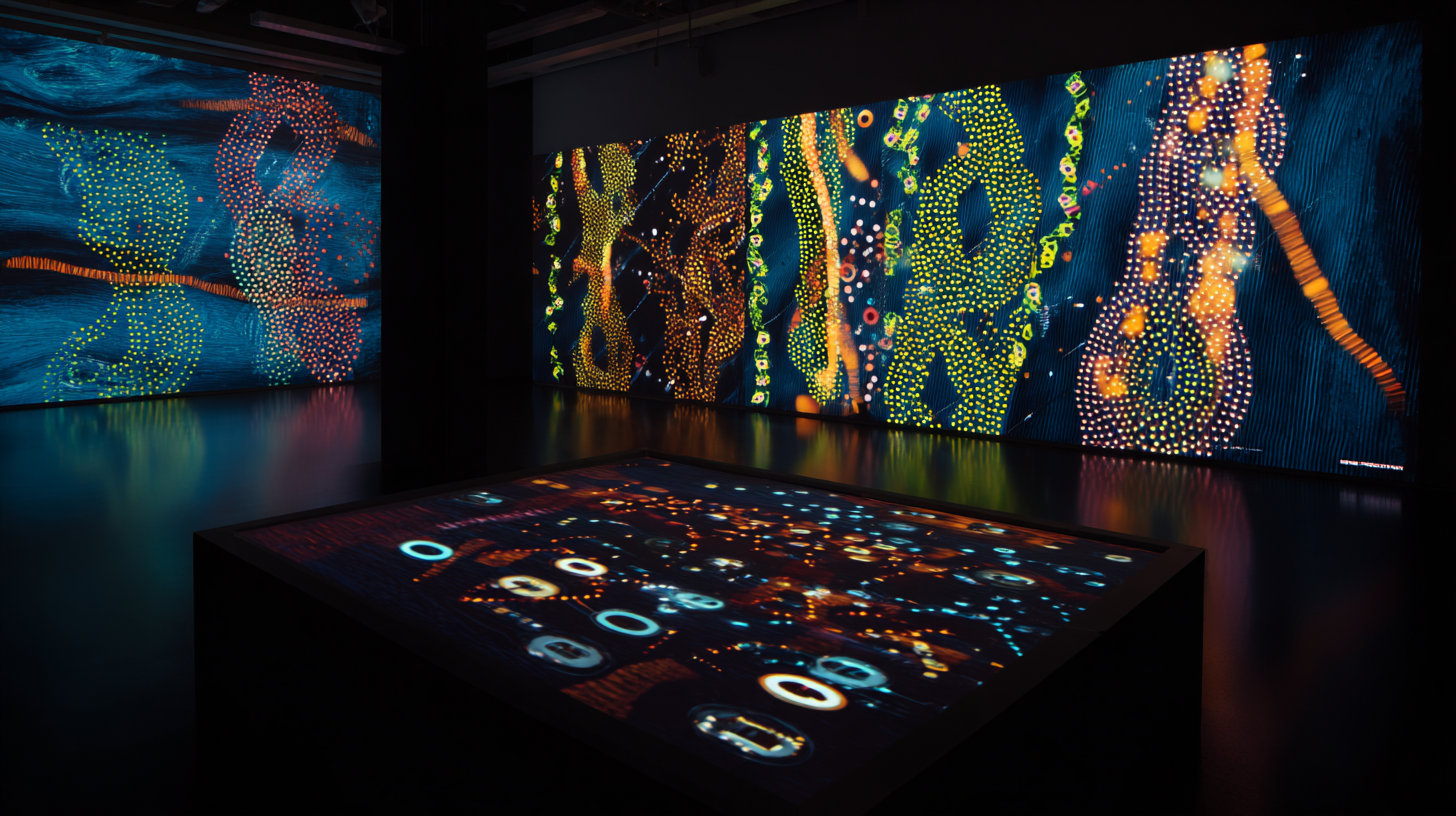
Installation view: data-driven interactive paintings reinterpreting genetic sequences through Indigenous aesthetics — translating code into ceremony.
5 questions
with yirkala dhunba
1. Your installation brings together cultural symbols and biotech lab equipment. How do you navigate the tension between these two very different worlds?
I don’t see them as opposites. Both culture and science are systems of knowledge, and both shape how we imagine survival. The tension comes from the fact that one has historically tried to dominate the other. My work forces them to sit in the same room, not in harmony but in confrontation.
2. When you were first featured in EE Journal in 2023, you described your practice as “art at the frontier of survival.” How has your thinking evolved since then?
Climate realities are accelerating faster than I imagined in 2023. That makes the work feel less speculative and more immediate. The frontier I spoke of has moved closer — now it feels like we are already inside the laboratory, already being asked to choose what parts of ourselves are preserved and what parts are lost.
3. How have Indigenous communities responded to the project?
With complexity. Some see it as empowering, others as deeply troubling. There is fear that by entering into the language of gene editing, we risk reinforcing the very frameworks that erase us. But there is also recognition that imagining survival on our own terms is a form of resistance. The mixed responses tell me the work is doing what it should: opening a debate that cannot be simplified.
4. Do you see AI as collaborator, threat, or something else in this context?
AI is a mirror of the systems that build it. In biotech it can accelerate discovery, but it also carries the same extractive logics that threaten Indigenous knowledge. For me, AI is not a collaborator but a provocation — a reminder that survival must be defined by those who live it, not by those who model it from afar.
5. If you had to imagine Indigenous Genomic Adaptation ten years from now, what would it look like?
It would not be static. Perhaps the lab would no longer be speculative, but a lived space of adaptation. Perhaps it would be dismantled, replaced by strategies of refusal and invisibility. The point is not to predict a single outcome, but to insist that Indigenous futures must be self-authored, whether through science, culture, or both.